How to choose a software development company: a founder’s checklist
A practical checklist for hiring the right software development partner — what to look for, the red flags to avoid, and the exact questions to ask before you sign.
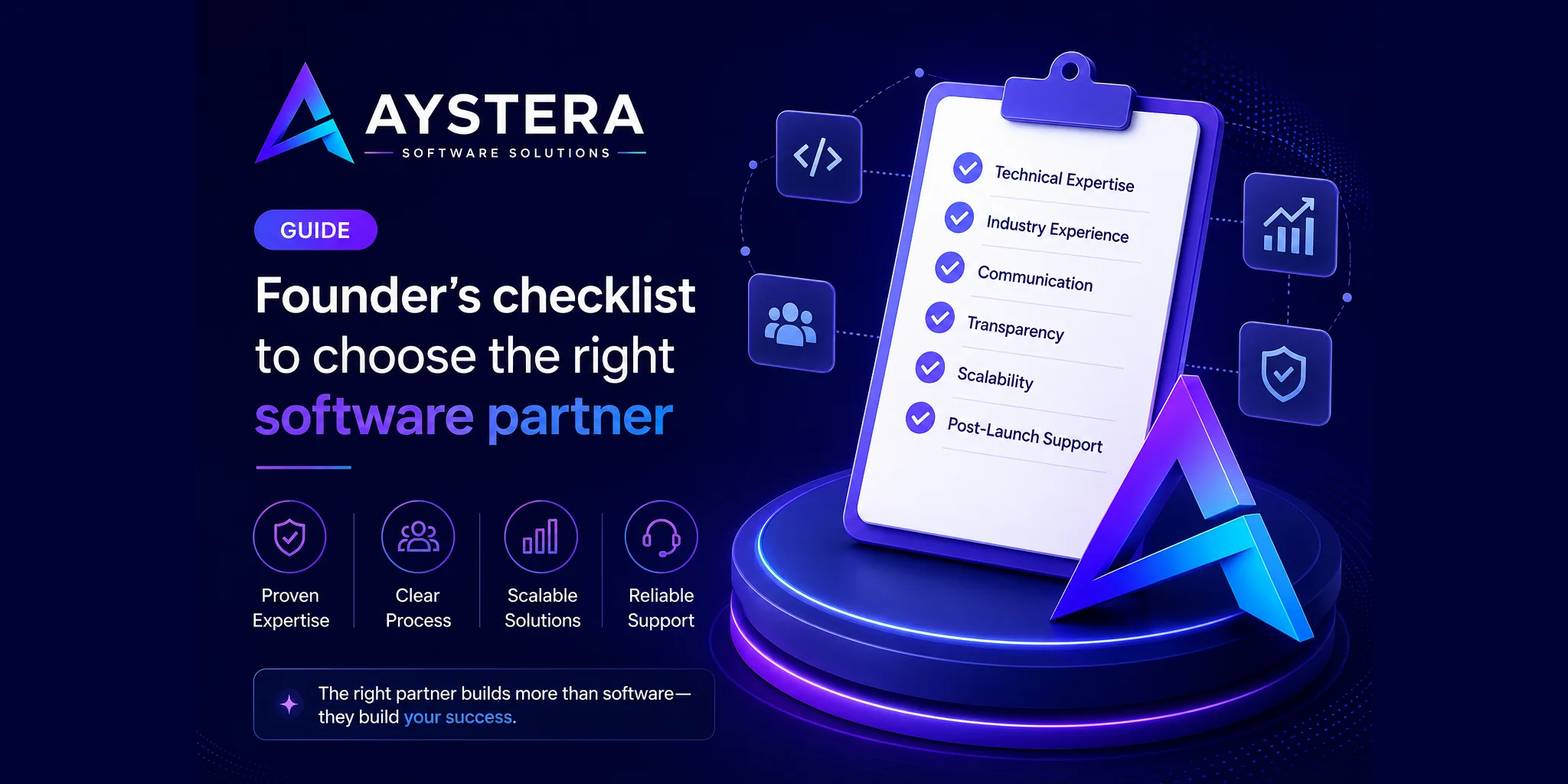
To choose the right software development company, judge four things: the seniority of the people who will actually build your product, their track record on similar work, how clearly they communicate, and whether they will own outcomes after launch. Price matters, but it is the worst primary filter — the cheapest team is often the most expensive once you count rework.
Here is a practical checklist we would use if we were hiring a partner ourselves.
What to look for in a software development partner
Strong partners tend to share the same handful of traits:
- Senior engineers on your actual project, not just in the sales deck
- Relevant case studies with real outcomes you can verify
- A clear, written process — discovery, milestones, weekly demos
- They ask hard questions about your business, not just your feature list
- They plan for after launch — SLAs, support and a maintenance model
Red flags to avoid
Dig deeper, or walk away, if you see these:
- A quote with no discovery — real scope needs a conversation
- No named team, or a bait-and-switch to junior developers after signing
- No code ownership or exit clause in the contract
- Vague answers on testing, security and deployment
- A price far below everyone else — it usually means rework later
Questions to ask before you sign
Ask these in the first two calls:
- Who exactly will build this, and how senior are they?
- Can I talk to a past client with a similar project?
- How do you handle scope changes, and who signs them off?
- What happens after launch — support, SLAs, handover?
- Do I own the code and IP outright?
Offshore, onshore or hybrid?
Offshore teams (like India) offer senior engineering at a lower rate and are a strong default for most builds. Onshore is worth the premium when you need constant in-person collaboration or strict data residency. A hybrid model — a senior offshore build team with an onshore product owner — often gives the best of both.
- Judge seniority, track record, communication and post-launch ownership — not price first
- Insist on a named senior team and verifiable case studies
- Always secure code/IP ownership and an exit clause
- The cheapest quote is usually the most expensive project
Evaluating partners for a build? We're happy to be one of the teams you pressure-test — contact@aystera.com or +91 75758 73458.
Frequently asked questions
Prioritise the seniority of the engineers who will actually build your product, verifiable case studies on similar work, clear communication and a plan for support after launch — above the lowest price.
Watch for a quote with no discovery, a bait-and-switch to junior developers after signing, no code or IP ownership and no exit clause in the contract, and a price far below everyone else.
Offshore teams (like India) offer senior engineering at a lower rate and are a strong default for most builds. Onshore is worth the premium for constant in-person collaboration or strict data residency; a hybrid model often gives the best of both.
You should own the code and intellectual property outright. Confirm this in writing before signing — reputable partners hand over full ownership plus an exit clause.
Want to talk to the team that shipped this?
We share notes, templates and a 30-minute call with no sales follow-up unless you ask for one.